The short answer
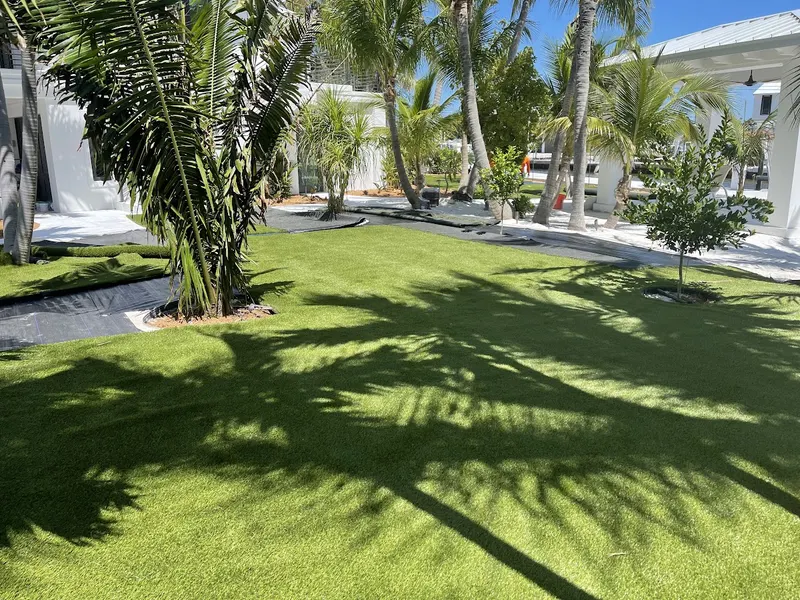
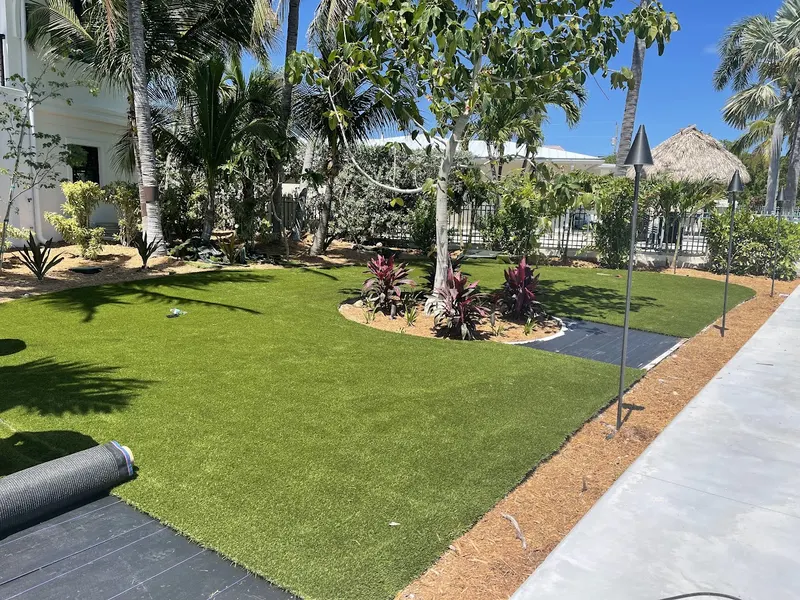
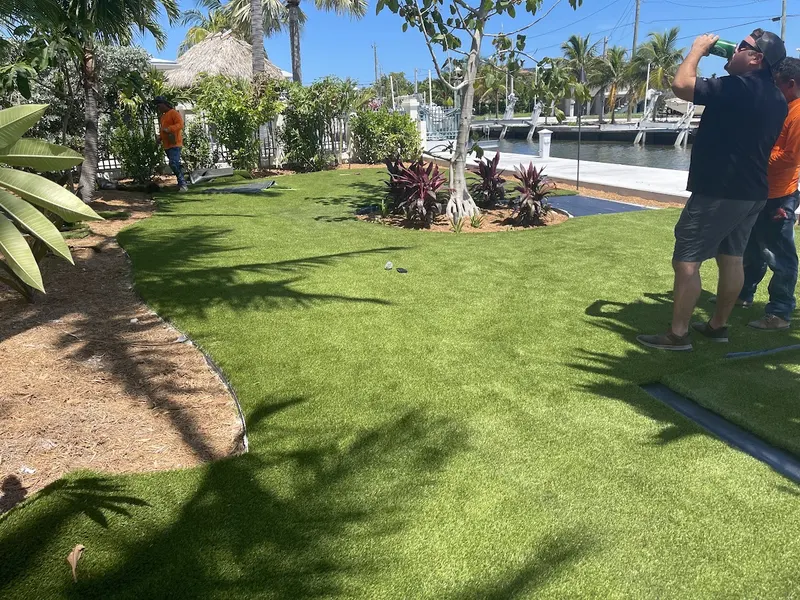
A proper install removes the old grass and soil, builds a compacted base that drains, secures the edges, lays a weed barrier, then cuts, seams and secures the turf before brushing in infill. Most turf failures come from a weak base or loose edges, not from the turf itself.
1. Dig out the old lawn
Grass, roots and loose soil come out so the new base sits on firm ground. Leaving organic material underneath is what causes dips later, as it breaks down.
2. Build and compact the base
Old grass and soil come out 2 to 3 inches below the sod line, and the base is never built on topsoil. In Southwest Florida the base that works is screening sand, the same sand paver crews bed driveways on. It's wetted and compacted in layers to a minimum of 95% Standard Proctor (ASTM D698), the Synthetic Turf Council's guideline and our own written spec (Florida's rule sets no compaction number). It ends up firm enough to hold its grade but still free-draining, and graded so water moves through and away from the house. Poor compaction is the most common reason turf develops low spots: water washes the loose base out and the turf sinks into divots. Crushed gravel only comes into it when a yard needs deep fill, and even then it gets capped with screening sand.
3. Secure the edges
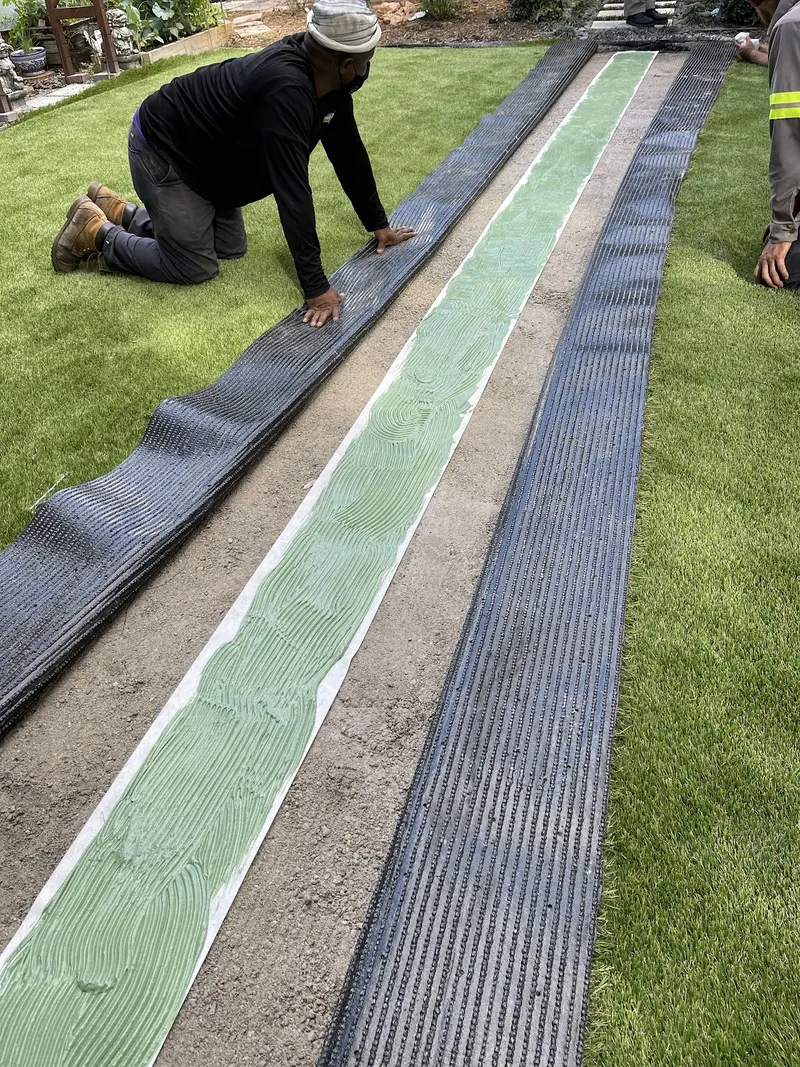
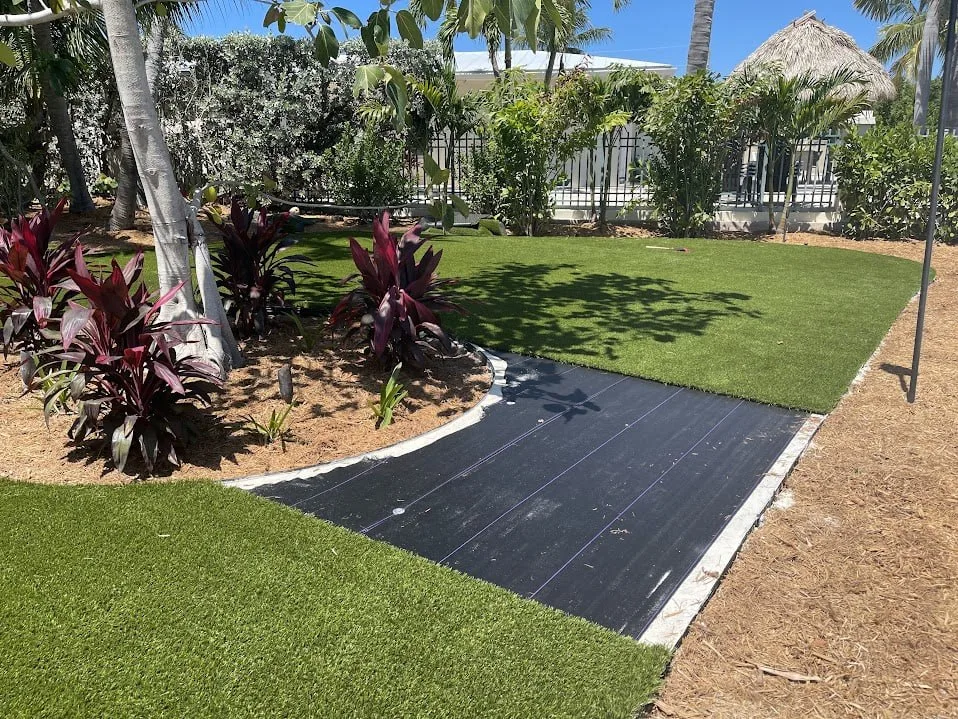
This is where installs differ most. The common shortcut is to pin turf down with 6-inch steel spikes driven through the lawn. We outline the area with 6-inch metal or plastic edging and pour a 3 x 3 x 3 inch concrete border along the inside of it, so the turf has something solid to be glued to.
4. Lay the weed barrier
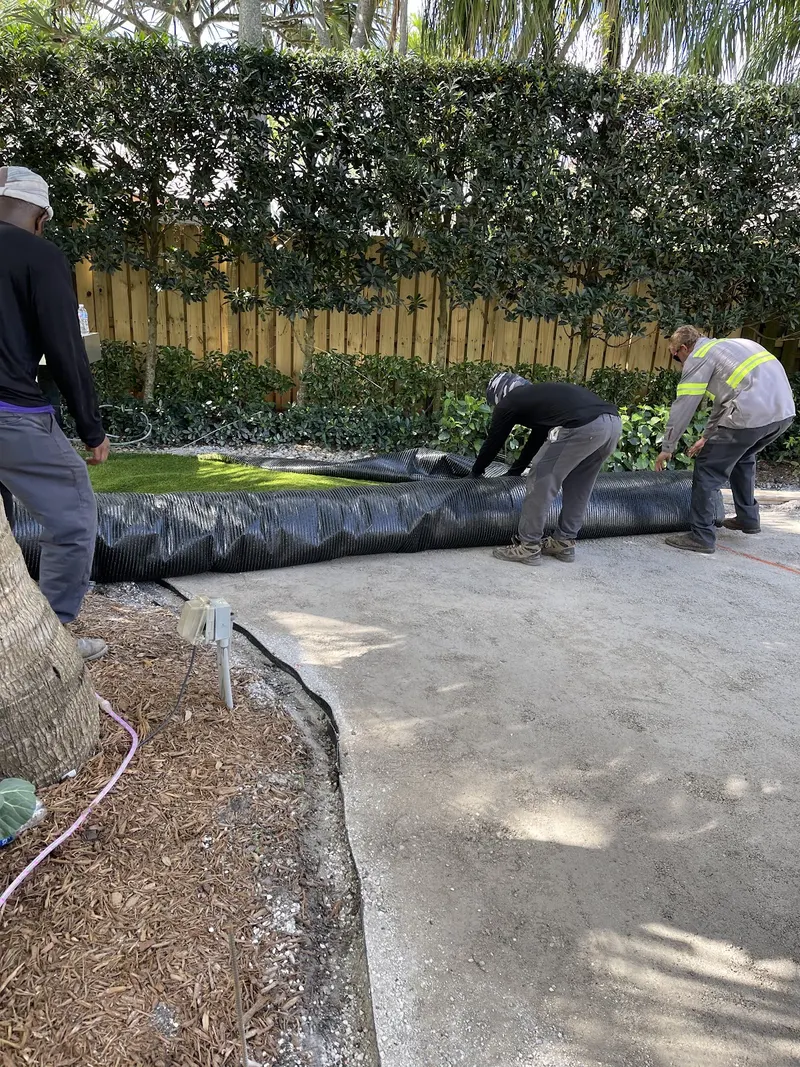
A woven weed barrier covers the entire area so nothing grows up through the turf and pushes or pierces it. Woven fabric is far stronger than the pressed (nonwoven) sheet sold at big-box stores, so it goes down intact and stays intact. The barrier is pinned with spikes or galvanized nails here, underneath where nobody walks. Nothing gets nailed through the turf itself.
5. Cut, seam and glue
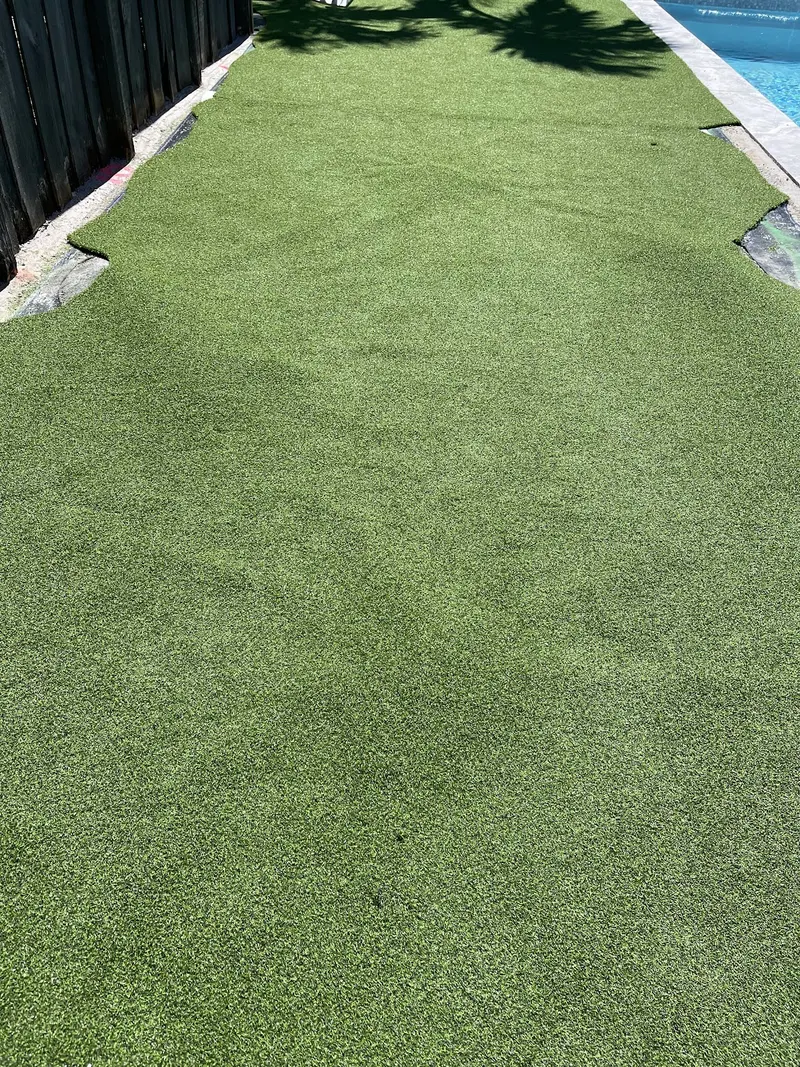
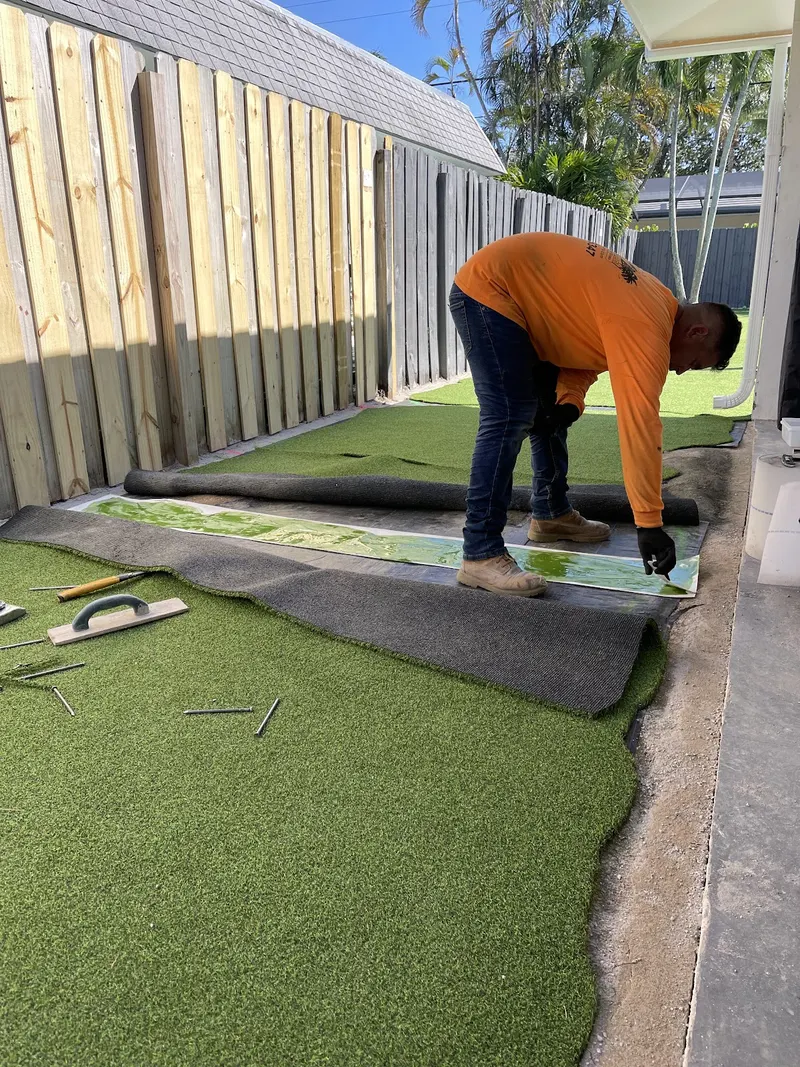
Turf is directional, so every piece is laid with the blades leaning the same way. In a back yard the blades lean toward the house, so you look into the best face walking out the back door; in a front yard they lean toward the street, for the people passing by. Turf comes in rolls about 15 feet wide, so larger yards need seams. Cuts are planned so seams run the same direction and sit where they're least visible, then joined with seam tape. The perimeter is glued to the concrete border with turf glue that carries a 15-year warranty.
6. Infill and brush
Infill, usually silica sand or a coated sand made for pets, is spread in thin passes and brushed in so the blades stand up and the turf stays weighted and stable. The turf is brushed against the grain, with synthetic bristles only, never wire.
How long it takes
For a typical residential yard, plan on about two days for every 1,000 square feet. Access, demolition and the shape of the yard can change that.
Want it built this way?
These are the steps behind our artificial turf installation in Southwest Florida, from Fort Myers to Naples. Turf already in and failing? See turf repair: we fix installs whoever put them in. Most installs run $9 to $15 a square foot, with one exact price after a free onsite estimate.
Where we install
- Artificial turf installation in Fort Myers
- Artificial turf installation in Cape Coral
- Artificial turf installation in Naples
- Artificial turf installation in Estero
- Artificial turf installation in Bonita Springs
- Artificial turf installation in Sanibel
- Artificial turf installation in Lehigh Acres
- Artificial turf installation in Marco Island
Common install questions
- How long does an installation take, and how messy is it?
- What base goes under turf — and why does a sand-only base fail?
- Do I need a weed barrier under artificial turf? Where does it go?
- Does artificial turf get mold, algae, or bugs?
- Does artificial turf contain PFAS or lead? Is it safe for kids and pets?
- Can turf go around a pool deck or over hardscape?
- What does an artificial turf warranty actually cover?
Sources
- AJ Turf install method (concrete border, weed barrier, compaction)
- Manufacturer infill installation guidelines (passes, brushing)
- Manufacturer landscape care guide (synthetic bristles only)
Updated 2026-11-18