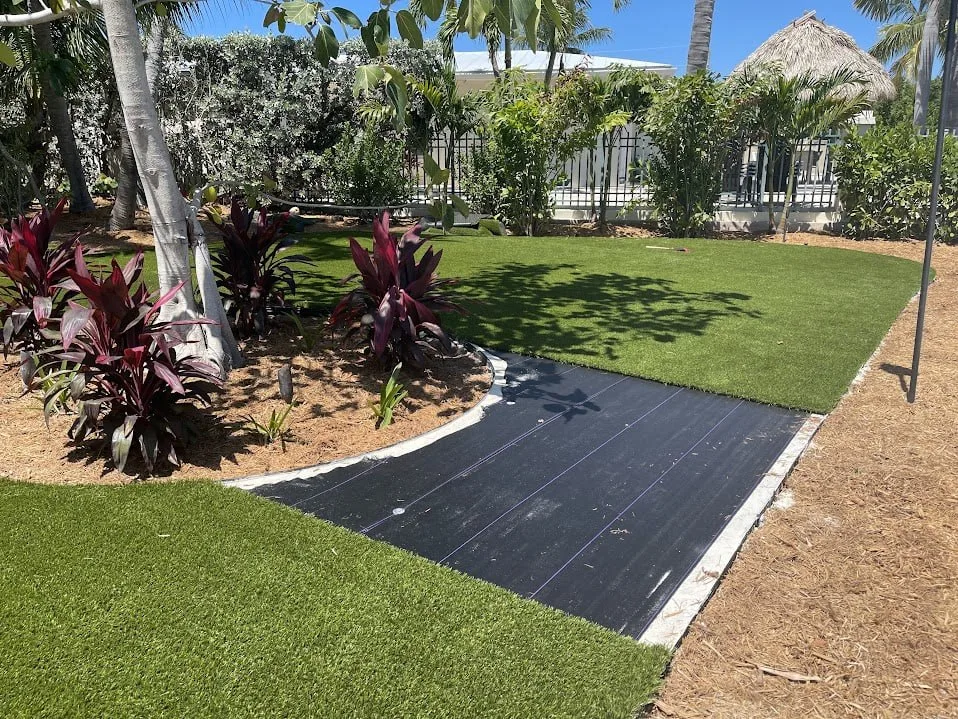
The short answer
The sprinkler heads inside the turf area are capped and left in place — never ripped out. The pipes, valves, and heads stay intact underground, which keeps your irrigation system whole and makes the yard reversible if you ever go back to grass. Heads outside the turf, in planting beds, stay live and keep watering as before.
Capped vs. removed — the difference
| Approach | What happens to the system | What it means later |
|---|---|---|
| Capped and left in place (AJ Turf) | Each head in the turf zone is capped; pipe and heads stay in the ground, intact | System preserved; turf can be removed and the yard returned to grass without rebuilding irrigation |
| Ripped out | Heads and often pipe are torn out during excavation | Going back means re-trenching and rebuilding the zone; the hardware is gone |
Why we cap instead of removing
Excavation for turf only goes about 2–3″ below the sod line, and the base is built above the existing lines — there is no construction reason to destroy the irrigation system to install turf. Ripping it out is faster for the installer and worse for the homeowner in every way that follows:
- Reversibility. Capped heads and intact pipe are what make turf a reversible decision. If a future owner — or you, in ten years — wants grass back, the zone can be uncapped and run again instead of rebuilt from the trench up. This is the single biggest reason we cap: see the related page on removing turf and going back to grass.
- No collateral damage. Tearing out heads risks the pipe runs, valve wiring, and the lines that also feed beds outside the turf area. A cap touches one head at a time.
- Compliance. Florida's turf rule (Rule 62-308.100) provides that in-ground irrigation cannot be used to irrigate synthetic turf areas. A capped head inside the turf footprint is the compliant configuration — the head is out of service on the turf, without destroying the system. The rule also allows a local government to require heads removed and pipe capped; the state itself permits, but does not mandate, removal.
What stays live
Capping is scoped to the turf footprint, not your whole yard:
- Heads inside the turf area: capped and left in place.
- Heads in planting beds and other non-turf areas: untouched and live — your beds still need water, and the turf install doesn't change that.
- The controller and zones: still yours to run for the areas that remain planted. Nothing about a turf install requires shutting the system down.
One practical note: private lines — your own irrigation runs, pool plumbing, landscape lighting — are not marked by Sunshine 811 locates before digging; they're the property owner's side of the line. That's another reason the work around existing heads is careful capping, not excavation and removal.
What changes about watering
The turf itself doesn't get watered — that's the point, and it's also the rule. Cleaning and cooling are done with a hose: a quick rinse washes dust and pet use off the surface and drops the temperature on a hot day. White or grey scale on blades, a known nuisance near sprinkler heads where mineral-heavy water oversprays onto turf, largely goes away in the turf zone once the heads there are capped — there's no more overspray depositing minerals on the pile.
Florida note
In Southwest Florida this question carries extra weight. Lee County runs year-round watering restrictions — one day a week in the dry-season months — and parts of Cape Coral have faced shortage orders restricting irrigation further. A capped, intact system is the flexible position: the turf needs nothing from it, the beds still get their legal day, and if restrictions, wells, or your plans change, nothing has been destroyed that you'd have to pay to rebuild.
The honest downside Capped heads are still there — if you later reconfigure beds, add a pool, or re-landscape, you'll work around lines that a rip-out would have removed. Capping also means the system needs a minute of attention if it's ever reactivated: caps come off, heads get checked for years of sitting, and the zone gets flushed before it waters a new lawn. And a capped head you forget about is a head that can surprise a future digging project — keep the install paperwork that shows where they are.
The gotcha Ask any installer who quotes you: "What do you do with the sprinkler heads in the turf area?" If the answer is "we just rip them out," you're hearing the fast answer, not the right one. Rip-out saves the installer time on install day and quietly converts your reversible turf decision into a permanent one — going back to grass then means paying to rebuild irrigation first. The reversibility is worth money. Don't let it be thrown in a dump trailer.
How AJ Turf handles this
Capping is written into the AJ Method, not improvised on site: existing heads in the turf area are capped and left in place, never ripped out, and the system stays intact. The rest of the build: dig about 2–3″ below the sod line, a screening-sand base (about 1 ton per 100 sq ft finished, minimum 2″ compacted layer) compacted to 95% Standard Proctor (ASTM D698) per Synthetic Turf Council guidance, a woven weed barrier on top of the compacted base under the turf — no under-base geotextile, the barrier is the only fabric — and the perimeter glued to a poured 3×3×3″ concrete border with 15-year glue. Nails and spikes secure only the barrier and seam tape underneath; they never go through the turf. Most installs run $9–$15 per square foot, exact price only from the free onsite quote; 1,000 sq ft minimum, typically scheduled within about two weeks, 30/35/35 non-refundable payments. Turf carries the manufacturer's warranty for the product you choose (8, 16, or 25 years, UV stability and strength only, prorated, non-transferable), plus AJ Turf's 1-year labor warranty. AJ Turf also prepares and submits HOA applications on the homeowner's behalf. We serve Fort Myers, Cape Coral, Naples, Estero, Bonita Springs, Sanibel, and Lehigh Acres.
Questions people ask.
Will capping the heads damage my irrigation system?
No — capping is the option that preserves it. Each head in the turf zone is capped in place; pipes, valves, and heads stay intact underground. Removing heads is what destroys the system.
Can I still water my planting beds after turf goes in?
Yes. Only the heads inside the turf footprint are capped. Heads in beds and other planted areas stay live, and your controller keeps running those zones as before.
Can I run the sprinklers to rinse or cool the turf?
No. Florida's rule provides that in-ground irrigation can't be used to water synthetic turf areas — and capped heads couldn't do it anyway. A hose rinse is the way to clean and cool turf; it uses water only when you actually need it.
If I sell the house, can the next owner go back to grass?
That's exactly what capping protects. With the system intact, removing the turf and uncapping the zone is a landscaping job, not an irrigation rebuild. With a rip-out install, the next owner starts with trenching and new pipe.
Updated 2026-10-13
